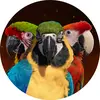
@shelbythemacaw: A pin feather, often seen in parrots and other birds, is a new feather that is in the process of growing and developing. It plays a crucial role in the bird's life, particularly in relation to molting, which is the process of shedding and regrowing feathers. Understanding Pin Feathers 1. Formation and Structure: Pin feathers, also known as blood feathers, form within a protective casing. This casing is made of keratin, the same material as the feather itself, and it initially envelops the entire emerging feather. As the feather grows, it pushes its way out of the casing, which often appears as a waxy tube. These emerging feathers are easily recognisable due to their thin, elongated appearance. 2. Blood Supply: During their initial growth phase, pin feathers are supplied with blood to support their development. This is why they are often referred to as blood feathers. The blood supply is critical for the feather’s growth but recedes once the feather reaches maturity, leaving the mature, dead keratinised structure we commonly recognise as a feather. 3. Sensitivity and Vulnerability: Pin feathers are quite sensitive and can be painful to the bird if handled improperly. Due to the blood supply, they can also bleed profusely if broken or damaged. This vulnerability requires careful handling, especially during grooming or when the bird is experiencing stress. Role in Molting 1. Molting Process: Parrots, like all birds, periodically molt their feathers, shedding the old and allowing new growth. This process is essential for maintaining healthy plumage, which is crucial for flight, insulation, and even social signaling. 2. Sequential Molting: Parrots often molt in a specific sequence, which ensures that they don't lose too many feathers at once, particularly those critical for flight. This sequential molting helps maintain their ability to fly and regulate body temperature. 3. Impact on Appearance and Behaviour: During molting, a parrot’s appearance can change, sometimes looking somewhat scruffy due to the mixture of old and emerging feathers. They might also show changes in behaviour, such as increased preening or irritation due to the discomfort of growing pin feathers. Importance for Parrot Owners 1. Care and Maintenance: For parrot owners, understanding the nature of pin feathers is essential. Gentle handling during molting periods is important, as is ensuring the bird's diet supports healthy feather growth. 2. Health Monitoring: Observing the state of a parrot’s pin feathers can offer insights into their health. Abnormalities in feather growth, such as persistent pin feathers or excessive loss of feathers, can indicate nutritional deficiencies or health issues. 3. Social Grooming: In the wild, parrots often engage in social grooming, which includes helping each other with hard-to-reach pin feathers. Pet parrots might seek this attention from their human caregivers, so learning how to safely assist in grooming can strengthen the bond between the parrot and its owner. In conclusion, pin feathers in parrots are more than just a stage in feather development; they are a vital aspect of a bird's life cycle, reflecting health, facilitating critical functions like flight and insulation, and playing a role in social interactions. For parrot owners, understanding and properly managing these delicate structures is a key aspect of effective and compassionate bird care.
Shelby The Macaw
Region: GB
Sunday 26 November 2023 10:29:56 GMT
5510284
459091
2264
11674
Music
Download
Comments
Laura :
I have genuinely never thought about how feathers grow and now I’m traumatised
2023-12-03 19:12:20
61096

The Goddess Coven :
I'd want to pick them out so badly 😅
2023-12-03 20:08:14
15441
Heartyaerie :
I know it’s not but it looks so painful
2023-11-29 05:26:58
20946
Rhea :
I think I wish I never saw pin feathers ❤️
2023-12-10 05:21:45
14279
Jenni 🖤 :
I am violently upset by this thank you
2023-12-10 03:38:58
4400

leah :
why would you tell me this.
2023-12-05 19:00:24
2906
××Uvic_Simp×× :
they look like paint brushes
2023-11-26 10:48:28
3513
Mya en Molly :
WHY IS IT CREEPING ME OUT.. FIRST TRYPOPHOBIA NOW THIS....
2023-12-03 22:00:37
1168
sana ♡ :
The overwhelming need to pick it, is too much ☠️
2023-12-09 23:23:40
1834

ellymareeolly :
You know what? I have NOT been wondering that AT ALL
2023-12-10 01:50:45
1441
🦁 :
first their ear holes and now this
2023-12-03 20:17:36
1042
Katarina :
I’m SICK
2023-12-10 03:10:58
1064

Sophie :
It feels like I've seen something forbidden. This is forbidden knowledge 😨
2023-12-03 18:40:26
602
Nina :
It looks so itchy
2023-12-09 23:22:08
924
poetic_vixxen :
I wish I never saw 💀😭
2023-12-10 04:21:57
366
marco :
I did not want to know that.
2023-12-04 17:17:33
222
feliiischa :
Warum habe ich das noch NIE gesehen 😳 in keinem bio buch, NIRGENDS
2023-12-03 19:46:58
329

✨STAAAA✨(^∇^)ノ♪ :
it looks like a disease help 😭
2023-12-03 19:18:44
314

Aims :
This just made my toes curl and teeth feel funny idk why soz
2023-12-03 23:34:45
513
Nibo :
I have not been wondering at all. But thanks for that
2023-12-03 17:18:07
867
daddylongpinkies :
Thanks for the education but I’m now unwell
2023-12-10 07:42:25
107
emilyzz 🦭 :
parecen extensiones
2023-12-09 18:48:46
186
Hel :
It seems curiosity has killed the cat 😟
2023-12-04 00:44:29
330
To see more videos from user @shelbythemacaw, please go to the Tikwm
homepage.