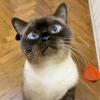
@_osloibrahim_: day 2 jadi akun bodong

Oslo Ibrahim
Oslo Ibrahim
Open In TikTok:
Region: ID
Sunday 03 May 2026 13:02:50 GMT
86193
3857
75
86

Music

Download

Comments

coklattuwo
Coklat Tuwo :
Kenapa nama akunnya😭😭😭
2026-05-03 13:29:12
23
agussaputra823
agus :
fery irwandi
2026-05-03 15:11:22
7
aline_alunaa
Aline_Aluna :
Keren kanda
2026-05-26 23:49:02
0
ubimanisxx
dadarr :
aku kagett. lho ngikutin siapa ni akuuu. rupanyaa abggggg 😌
2026-05-03 13:05:03
12
panda.dupan
ursavagegoodboi :
judul lagu bang?
2026-05-03 13:18:25
0
sherlock.holmes.sh
Kenn :
akun lu kena ban bang?
2026-05-03 13:21:36
4
yourbaeee038
yourbaeee038 :
Ganti gaaaaaak user namenya!!
2026-05-04 00:29:14
2
4lyfeszn
ingreee :
yg lagu ini keknya bakalan viral
2026-05-03 19:59:32
1
vyna.rf
vyna.rf :
Dia siapa?🥺
2026-05-04 04:11:05
1
dzuuhry
buenvillano :
user baru
2026-05-03 14:07:31
0
eighthandboss
𝙋𝙞𝙘𝙤𝙡𝙤 :
ini abang abang top 5 itu ya?
2026-05-04 01:44:53
6
bamban9202
Mass Kevvv :
tuh asli suara lo bangg? infoin lagunya lahh
2026-05-30 08:06:52
1
jack_the_seawit
42% :
emng gabisa diedit ulang namanya bg?
2026-05-06 09:33:13
0
davimulya
dvmly :
tinggi amat lu bang
2026-05-03 15:32:38
1
ervaannww
Bro Ervaan :
Judul lagu bang
2026-05-22 03:15:53
0
wadidaw8207
nofal :
sekilas kirain Gerral
2026-05-13 10:13:51
0
walang.keke12
Walang Keke :
tinggi bngt lu yo
2026-05-04 06:36:23
1
di.dooo_
di.dooo_ :
bang , waktu itu pernah ke sukabumi bukan sih?
2026-05-06 17:45:17
0
jvnajvna
JVNA :
Bang lagu lo enak
2026-06-03 05:06:17
0
amldh33
dheaa :
hai user
2026-05-05 10:21:44
0
prasetyoekogeese
Prasetyo :
Ini kode bitcoin kah
2026-05-05 09:54:54
0
laudinochristianvieri
law :
kerenn bg
2026-05-05 09:08:44
0
ikonicgranma
Yeti :
gua kaget kok gua follow akun bodong, eh ternyata Oslo Ibrahim
2026-05-05 04:27:55
0
inung.setiadi
Inung Setiadi :
loh kirain akun muridku, biasanya nama akunnya gaje begitu😅
2026-05-05 02:46:26
0
rennerapathyfromskylarr
kailikumal :
gua suka bgt gaya dia
2026-05-03 13:27:49
0
To see more videos from user @_osloibrahim_, please go to the Tikwm homepage.

Other Videos

I spent years thinking I was the problem. Not dramatically — I wasn’t walking around certain I was broken. It was subtler than that. I just consistently second-guessed what I remembered. Apologized for reactions before anyone told me they were wrong. Felt something shift in a conversation and then spent the next hour deciding I had misread it. I was very good at overriding my own perception. Here’s what I eventually understood about that: That skill — the overriding — was learned. It developed in a specific environment where my read on what happened was regularly corrected. Not cruelly. Just consistently. “That’s not what I said.” “You’re making that up.” “You always do this.” “You’re being too sensitive.” Said often enough, those corrections don’t land as corrections anymore. They land as evidence. Evidence that the problem with any given situation is probably my perception of it. That’s not a personality type. It’s an adaptation to an environment that made my perception unsafe to trust. The first step out of it is almost always the same: Start trusting the first read again. The one before the self-correction. Write it down before you talk yourself out of it. Talk to someone outside the dynamic. Let your initial reaction exist long enough to examine it before you override it. The perception usually wasn’t the problem. The training to distrust it was. … The physiological cost of chronic self-doubt is measurable. The nervous system under sustained uncertainty about one’s own perception runs in a low-grade threat state — not because anything acute is happening, but because the basic capacity to evaluate the environment has been disrupted. It shows up in cortisol. In sleep. In the exhaustion of NEVER fully trusting what just happened in the room. The body cannot fully rest when the mind doesn’t trust its own signals. Recovery starts when the signals get trusted again — the first read, before the correction. That process is slower than the disruption that caused it. But it moves.

About