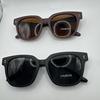
@optic_melissa:

Optic melissa
Optic melissa
Open In TikTok:
Region: DZ
Friday 29 May 2026 16:44:39 GMT
60934
2705
98
109

Music

Download

Comments

nagjib.aissasnou
Nagjib Aissasnou :
شابة الله ايبارك
2026-06-03 21:33:11
0
mascarahoucine.gl
Hocine Hocine :
السعر في زوج
2026-05-31 09:20:23
1
maram.oumnia
💓💓 :
le prix
2026-06-02 18:19:08
0
said.antik5
Said antik :
واوwaw🥰😍🥰😍
2026-05-29 22:25:32
1
amelladyangel
amelladyangel :
prix svp
2026-05-31 18:16:31
0
adeltroy7
adeltroy7 :
ربي يرزقك
2026-06-02 11:23:36
0
salim.elidrissi6
salim salim :
مترم الله يبارك
2026-05-30 09:25:25
1
joud.allali
JOUD ALLALI :
أيا ومن بعد
2026-06-02 10:01:20
0
user07529290
user075292 :
ou vas le monde
2026-06-01 22:08:08
0
mohamed.melha7
Mohamed Houssem :
شابين بزاف
2026-05-31 20:20:21
0
roudayna002
Mayssa :
شحال
2026-06-01 14:40:05
0
sami.anes8
Sami Belkhir :
prix sv
2026-05-31 19:51:36
0
fatimafatoum327
fatimà 276😌 :
شحال ختي
2026-06-01 14:26:57
0
zigui.nas5
zigui nas :
راكي غالط 😁
2026-06-01 17:58:59
0
phnician
Phœnician :
اختي واش يجي على وجه طويل🥰
2026-05-31 20:17:37
0
sondageenligne89
major :
شابه فالبلو🥰
2026-05-31 17:54:51
0
amer.charfi
Amer Charfi :
واش الزين سفا شوية 🥰🥰🥰😁😁😁
2026-05-29 16:46:56
0
zouhirsmail8
zouhirsmail8 :
شحال تعيشى
2026-05-29 16:55:58
0
abdeladerkader
abdelkader 🫡 :
جديده في لمهنة
2026-05-30 19:55:28
0
slimanislimani087
Abdenour :
شادي شباب عليك
2026-05-30 18:00:10
0
psychologue12025
Sama psy🥼🧠 :
شحال هكا
2026-05-30 20:34:00
0

laminmouhka
lamin mouh :
راكي غالطة
2026-06-03 21:43:17
0
thiziri1013
thiziri :
le prix
2026-05-30 20:41:17
0
mina.3556677
🥰احلى❣️ مااامي 🥰 :
هههه اني نضحك انا عارفة علاه نتي لالا 😅😅
2026-05-30 18:07:02
0

benaliatouissi4
benaliatouissi4 :
بوقوص تعنا
2026-05-29 16:58:08
0
To see more videos from user @optic_melissa, please go to the Tikwm homepage.

Other Videos

znjwhsvdhd #initiald #fyp A microscope is an instrument to see objects too small for the naked eye. The science of investigating small objects using such an instrument is called microscopy. Microscopic means invisible to the eye unless aided by a microscope. An early microscope was made in 1590 in Middelburg, Netherlands. Two eyeglass makers are variously given credit: Hans Lippershey (who developed an early telescope) and Hans Janssen. Giovanni Faber coined the name for Galileo Galilei's compound microscope in 1625. (Galileo had called it the
znjwhsvdhd #initiald #fyp A microscope is an instrument to see objects too small for the naked eye. The science of investigating small objects using such an instrument is called microscopy. Microscopic means invisible to the eye unless aided by a microscope. An early microscope was made in 1590 in Middelburg, Netherlands. Two eyeglass makers are variously given credit: Hans Lippershey (who developed an early telescope) and Hans Janssen. Giovanni Faber coined the name for Galileo Galilei's compound microscope in 1625. (Galileo had called it the ""little eye".) The first detailed account of the interior construction of living tissue based on the use of a microscope did not appear until 1644. It was not until the 1660s and 1670s that the microscope was used seriously in Italy, Holland and England. Marcelo Malpighi in Italy began the analysis of biological structures beginning with the lungs. Robert Hooke's Micrographia had a huge impact, largely because of its impressive illustrations. The greatest contribution came from Antoni van Leeuwenhoek who discovered red blood cells. On 9 October 1676, Leeuwenhoek reported the discovery of micro-organisms. The most common type of microscope—and the first invented—is the optical microscope. This is an optical instrument containing one or more lenses producing an enlarged image of an object placed in the focal plane of the lenses. "Microscopes" can be separated into optical theory microscopes (Light microscope), electron microscopes and scanning probe microscopes. Optical microscopes function through the optical theory of lenses in order to magnify the image generated by the passage of a wave through the sample, or reflected by the sample. The waves used are electromagnetic (in optical microscopes) or electron beams (in electron microscopes). Optical microscopes, using visible wavelengths of light, are the simplest and most used. Optical microscopes have refractive glass and occasionally of plastic or quartz, to focus light into the eye or another light detector. Mirror-based optical microscopes operate in the same manner. Typical magnification of a light microscope, assuming visible range light, is up to 1500x with a theoretical resolution limit of around 0.2 micrometres or 200 nanometers. Specialized techniques may exceed this magnification but the resolution is diffraction limited. The use of shorter wavelengths of light, such as the ultraviolet, is one way to improve the spatial resolution of the optical microscope, as are devices such as the near-field scanning optical microscope. Sarfus, a recent optical technique increases the sensitivity of standard optical microscope to a point it becomes possible to directly visualize nanometric films (down to 0.3 nanometer) and isolated nano-objects (down to 2 nm-diameter). The technique is based on the use of non-reflecting substrates for cross-polarized reflected light microscopy. Phase contrast microscopy is an optical microscopy illumination technique in which small phase shifts in the light passing through a transparent specimen are converted into amplitude or contrast changes in the image. A phase contrast microscope does not require staining to view the slide. This microscope made it possible to study the cell cycle. The traditional optical microscope has recently been modified into a digital microscope, where, instead of directly viewing the object, a charge-coupled device is used to record the image, which is then displayed on a computer monitor. Three major variants of electron microscopes exist: - Scanning electron microscope: looks at the surface of bulk objects by scanning the surface with a fine electron beam and measuring reflection. May also be used for spectroscopy. - Transmission electron microscope: passes electrons completely through the sample, analogous to basic optical microscopy. This is a scientific device that allows people to see objects that could normally not be seen by the naked or unaided e

About