
ᙅㄚᙖㄖᖇᎶ丩꧰
Region: US
Thursday 08 October 2026 10:18:20 GMT

5656
305
187
5
Music
Download
Comments

Zoey Frost | Fantasy Author :
Who cares!! It is still your own idea, creation, and vision.
2026-10-31 13:40:53
0

bees____knees :
If you use AI for your book cover I don’t trust that you didn’t use it for your book.
2026-10-14 20:40:20
3

Em :
when it comes to the covers, I understand an indie author using AI. They're already strapped cash having to self-publish and do all their own marketing. Commission art can get pricey and they might not have the resources available
2026-10-12 18:18:07
5

F. S. Ardeen :
I used a photo from my camera and edited it to add text. Does this look like AI to you, too? [Innocent]
2026-10-30 10:25:47
1

✨The Only Eunice You Know✨ :
I used AI for my covers at first and I have used my photos and added words and still been accused of AI … the bullying is actually so ridiculous I would rather read a book with an “AI” cover because that’s what attracted me to the book and those people are actually nice !! The boring covers that look like they all used canva and they are mean and I’m not attracted to the book … what happened to don’t judge a book by its cover 🤷🏻♀️
2026-10-19 01:56:05
11

sturang3 :
Person who hates AI proceeds to throw book cover into a AI detector that uses AI asking if it’s AI. “How dare you use AI”
2026-10-09 06:32:07
36

Lori :
I am 61 yrs old and have been creating art since I was a kid. Took me decades to get good..now that I've finally feel confident to share my art...I get accused of it being AI. I was getting so upset, but then I quickly realized the accusations were from people that HAVE NO IDEA WTF they are talking about.😏
2026-10-26 04:58:10
4

69th Hokage :
imagine paying 1100 to get your book cover illustrated and everyone on booktok calls it AI slop haha its a reoccurring nightmare lol
2026-10-29 00:20:57
3

Author S. Pierce📚☠️ :
yep, I got accused on my bookcover for my last book when Im a graphic design artist and it frustrated me so much my next two bookcovers have been hand drawn by me but im sure someone will still try to say its AI- this cover is not AI but it is what it is. I'm proud that my creation is good enough to be considered AI generated.
2026-10-11 08:17:21
9

The Crafty Gen❌️'er :
Right, even before AI very few people used graphic designers, we used Clipart and or Adobe photoshop. People have no clue
2026-10-26 17:33:06
2

Author Iona Rivers 📚 :
Don’t try to get on the Pay Me to Read as an author either. They claim everything is AI. 👎🏻
2026-10-12 13:07:05
2
Ragebating :
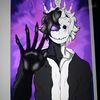
I spent actual hours drawing this , on my IPad...had the proof- was still acused of using AI because of the lights.....
2026-10-25 08:20:41
6

Carolyn Wice - Author :
Scream it from the mountain top!!!
2026-10-24 06:16:52
2

MGKvoice :
More human art is beg tagged as ai , I’m not sure these detectors actually work at a usable percentage
2026-10-08 14:15:49
8

israelsantiago0601 :
I love you as a cool vibes best friend of yours and even though you call me sir on your YouTube channel of cyborg 40-Nyx🤘❤️🔥 and I don't care if you are made with ai I'm just loyal as a best friend of yours and you have a lot of real true devoted loving caring friends and families and fans that don't care if you are ai because we all treat you with love and kindness always follows you so deeply towards you cyborg 40-Nyx🤘❤️🔥 whoever you have in your short videos women's or men's we all are always stand by you as the closest familys we have towards you on YouTube or on tik Tok💜💙 so please take care of yourselves and be safe in wherever you go in your beautiful wonderful life of yours with cool vibes from me & your loving caring familys & friends 💜🎶💙🎶💜🎶💙cheers💙🎶💜🎶💙 rock on different musics songs videos lyrics be well💜stay amazing💙U rock all our hearts!
2026-10-08 11:16:02
2

Princess Fi🦋🌈•Author✍🏽 :
I’ve had people tell me using punctuation and capitalization in sentences is ai…
2026-10-09 17:25:45
2

Toby "SeerSGB" Woods :
It's gatekeeping. it's gatekeeping fueled by legacy publishing if you ask me. another way to keep indie authors down
2026-10-12 04:34:19
2

John Drogos Books :
There are covers (and writing that's pretty obviously bad AI. But there's tons of stuff that could be either way. The fact that AI is trained using human work just means more and more human work will look like AI and vice versa.
2026-10-18 00:30:24
2

MJ Life Author 📚 :
I honestly dont give a crap if someone uses AI... not my business. readers will know when things dont add up. ill just stay over here in my own lane and mind my own business.
2026-10-23 14:48:55
2

AuthorAdalynLondon :
I sketched my cover and put it in Canva to color it. I also write in Reedsy. I can draw but I cant paint 🤷♀️I have no problem saying my cover was made in Canva😂
2026-10-17 09:57:45
2

Nu Nu 's World :
do what works for you, your vision and budget
2026-10-26 22:51:40
2

LoriColwellAuthor :
I love this!
2026-10-14 20:44:03
1
KEllis and Adonis.author :
I have a tremendous respect for the talent and work of professional cover designers and artists. But not every independent or new author can afford professional cover design, and even when they can, the finished artwork may not always capture the characters, setting, or atmosphere the author envisioned. AI offers another option for creating a book cover. It allows an author to develop, revise, and refine a visual concept until the cover represents the story they created, at a cost they can afford. Using AI for a book cover does not mean disrespecting artists. It means using an available creative tool. There is room for professional designers, traditional artists, photography, stock images, DIY design, and AI-assisted covers. This also raises a fair question. Programs such as Canva, CapCut, PixVerse, and many other creative platforms are routinely used by creators to produce promotional images, book trailers, advertisements, social media content, and humorous videos, often with AI-assisted features. If an author is criticized for using AI to help create a book cover, where should that line be drawn? An AI-assisted cover does not automatically mean the story behind that cover was created or written by AI. The cover and the writing are two separate parts of producing a book. Should all creators who use AI-assisted tools be judged by the same standard? Should a book cover be judged simply because AI was involved, or should the real questions be whether the author had the right to use the elements involved, whether the process was represented honestly, and whether the finished cover successfully represents the book? Perhaps the better question is not simply, “Was AI used to create this cover?” but, “How was AI used to create it?"
2026-10-15 00:27:24
2

Mandy Kraft | Author :
At this point we need to go back to writing in papyrus and hand painting it because apparently according to the witch hunt every new author is using AI which is ridiculous
2026-10-15 22:05:29
4

Jade :
I’m not for the AI book covers because they look awful to me but I do think it will get to the point that we won’t be able to tell what is AI and what is human made in the next few years. There already is an issue of that happening with AI videos so it’s only a matter of time until we can’t decipher which is real and which is AI.
2026-10-14 23:44:37
3
To see more videos from user @cyborg40nyx, please go to the Tikwm
homepage.


